

The decision at a glance
Scan the points below, then read the sections relevant to your situation.
Strong reasons to evaluate Zoho ERP
- Bills of Materials and multi-stage production are required.
- Shop-floor work needs job cards and work centres.
- Procurement, inventory, quality and finance must share one transaction flow.
Relevant distribution requirements
- Multiple warehouses or structured stock movement.
- Coordinated fulfilment, delivery and returns.
- Supplier and inventory activity must connect with accounting.
Confirm before selection
- Regional product availability and plans.
- Required integrations and migration scope.
- Traceability, quality and operational exception rules.
Do not select an ERP because
- It has the longest feature list.
- The business has reached an arbitrary employee count.
- Existing processes have not yet been mapped.
- Zoho ERP is a dedicated enterprise resource planning system.
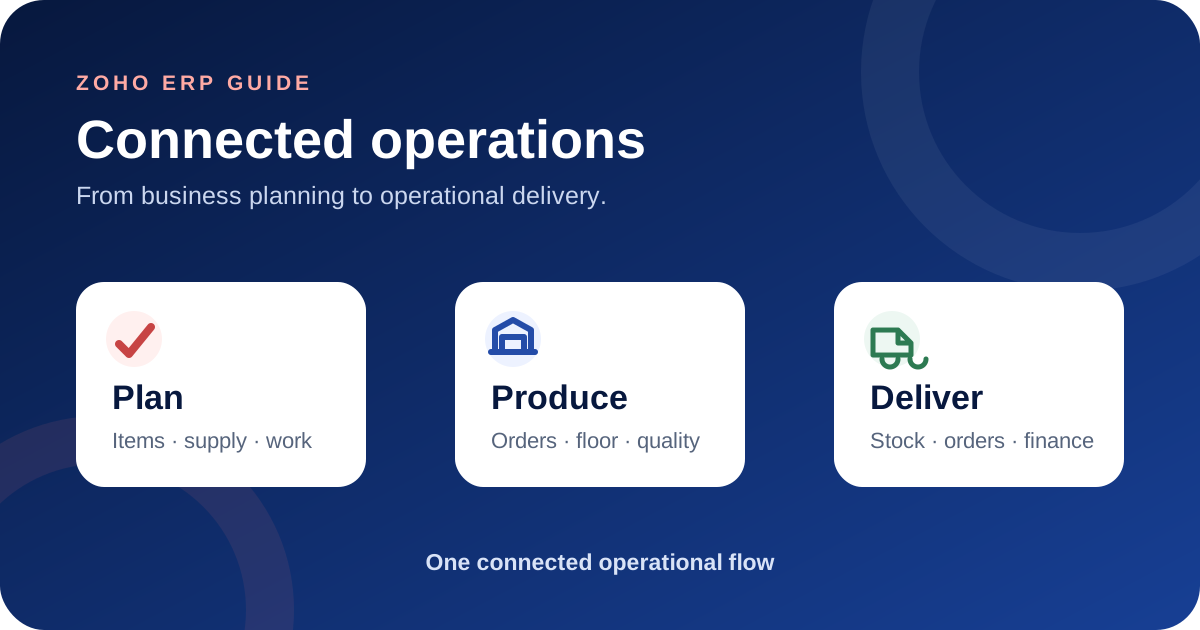
- It connects operational data and execution across manufacturing, procurement, inventory, fulfilment and finance.
- Its public product material currently focuses strongly on manufacturing and distribution businesses.
Unlike a collection of departmental applications, an ERP is organised around shared resources and transactions. A material purchase, stock movement, production activity, quality result and financial entry should form parts of one controlled operating record.
What is Zoho ERP?
Zoho describes its ERP as software that integrates, centralises and streamlines an organisation’s resources, data and operations. The product combines commercial and financial records with execution workflows that are especially relevant to manufacturing and distribution.
The platform includes general commercial and financial functions alongside business-specific operations. Manufacturing modules can be enabled for Bills of Materials, manufacturing orders, job cards and shop-floor work.
The official material reviewed for this guide was India-specific. Confirm current regional availability, licensing and implementation scope with Zoho before selection.
01Item masters and Bills of Materials
Items represent the goods a business buys or sells and the services it offers. A controlled item master gives procurement, production, inventory, sales and finance a consistent reference for codes, units, pricing and stock behaviour.
The quality of this master data affects every later transaction. Duplicate item codes, inconsistent units or unclear product variants can undermine planning and reporting even when the software is configured correctly.
A Bill of Materials defines how a product is made. Zoho ERP documentation describes associating the finished item, component requirements and production steps such as casting or assembly with the relevant work centre.
The implementation should decide how revisions, substitutes, scrap expectations and product variants are controlled before historical product structures are migrated.
02Manufacturing orders
Manufacturing orders turn an approved production requirement into executable work. Zoho ERP allows a manufacturing order to specify the item, quantity, associated Bill of Materials and production details.
A useful manufacturing-order design also clarifies demand source, planned dates, responsible team, material availability and the conditions required before production can begin.
03Job cards and operation tracking
Job cards divide the operations in a manufacturing order into individual jobs and allocate work to work centres. This creates a structured way to communicate and monitor the work required on the shop floor.
The important implementation decision is the level of detail. Excessive job-card complexity can slow adoption, while insufficient detail can hide delays, rework and capacity constraints.
04Work centres and shop-floor execution
Work centres represent the production resources used to perform operations. Zoho ERP’s manufacturing material describes planning work, monitoring planned versus actual progress and using a live time clock for shop-floor activity.
Factories should map real work-centre availability, shifts, breaks, skills and operating constraints instead of recreating an idealised process that teams cannot follow.
05Production planning and manufacturing calendars
The manufacturing calendar provides timeline views for work centres, manufacturing orders and shop-floor staff. It can show scheduled work and available or overloaded time slots.
Planning becomes valuable when it uses credible lead times, capacities and priorities. The software cannot compensate for missing operating rules or inaccurate master data.
06Inventory and warehouse control
Zoho ERP connects inventory activity with procurement, production, sales and fulfilment. Its distribution material describes multi-location stock, transfer orders, structured picking and detailed stock tracking.
The required design depends on whether the business needs simple stock visibility or controls involving warehouses, batches, lots, serial numbers, expiry, transfers and production locations.
07Procurement and supplier management
Procurement should connect material requirements with suppliers, purchase orders, receipts, bills and payment obligations. This provides a traceable path from a requirement to the resulting inventory and financial entries.
Before configuration, document approval thresholds, preferred suppliers, lead times, partial receipts, inspection requirements and how price or quantity differences will be resolved.
08Quality inspections and traceability
Zoho ERP includes quality templates and rules for inspecting manufactured or purchased items. Its manufacturing material also describes tracing batches, lots or serial numbers through materials, production and finished goods.
Quality is not a checkbox added after production. Inspection points, sampling logic, acceptance rules, nonconformance handling and evidence requirements should be agreed with the operational team.
09Fulfilment, returns and distribution operations
For distributors, Zoho ERP product material covers sales and order execution, warehouse management, field sales, fulfilment, delivery, returns and reverse logistics.
This matters when completing a sale requires coordinated work after order confirmation—for example allocation, picking, packing, dispatch, delivery, rejection or return.
10Connected financial and operational reporting
An ERP should connect operational events with accounting consequences. Zoho describes financial capabilities including receivables, payables, reconciliation, inventory valuation, cost of goods sold and multi-branch visibility.
The value is not merely having more reports. It is establishing reliable transaction ownership so that management can relate materials, production activity, stock, revenue, cost and margin.
When Books or Inventory may no longer be enough
Zoho Books can support accounting and basic stock-related transactions, while Zoho Inventory adds order, warehouse, package and shipment workflows. They may remain appropriate when production execution is not part of the requirement.
Evaluate Zoho ERP when the business must connect materials, Bills of Materials, production orders, work centres, quality checks, traceability and operational finance inside one controlled lifecycle. The trigger is process depth and dependency—not company size alone.
- 01Production must consume components and create finished goods through defined operations.
- 02Capacity, shop-floor progress or manufacturing calendars affect delivery commitments.
- 03Quality and traceability must follow purchased material through finished output.
- 04Procurement, production, warehouses, fulfilment and finance need common transaction ownership.
Who should evaluate Zoho ERP?
- 01Manufacturers that need Bills of Materials, production orders and shop-floor execution.
- 02Businesses that must trace materials, batches, lots or serialised goods through operations.
- 03Distributors managing procurement, warehouses, field sales, fulfilment or returns.
- 04Companies whose finance and operational records must follow the same transaction lifecycle.
- 05Growing businesses replacing spreadsheets or disconnected systems that no longer provide reliable control.
Zoho ERP should be evaluated through representative workflows, not through a feature checklist alone. Product capabilities, limits, integrations and availability remain subject to Zoho’s current plans, documentation and confirmation.
Product statements were checked against official Zoho material. The implementation analysis and decision guidance are original Aurnex editorial content.
VerificationSources and product references+
Product statements were checked against these official Zoho pages. Availability can vary by region, edition and configuration.
Are you evaluating Zoho ERP for your operations?
- ?Which production, procurement, inventory, quality and finance processes must share one operating record?
- ?Where do Zoho Books or Zoho Inventory stop providing enough operational control for the current workflow?
- ?Do Bills of Materials, work centres, job cards or production planning form part of the requirement?
- ?Which plants, warehouses, legal entities and user roles are in scope?
- ?Which representative transaction should be tested before selecting the ERP design?
If any of these questions are part of your ERP evaluation, share your current process with Aurnex. We can help you structure the requirements before selecting modules or planning implementation.
Book a consultation